There was a time when managing type one diabetes meant finger pricks, handwritten logbooks and carrying around a separate device for everything. Your meter was one thing, your pump was another and diabetes data lived in fragments.
Now, so much of my diabetes lives in my phone. And I don’t think we talk enough about what that actually means.
Diabetes Technology Has Changed Everything

We are living in a time of extraordinary advancement in diabetes tech. Continuous glucose monitors stream data in real time. We can see trend arrows, patterns, time in range. We can share our numbers with partners, parents or friends. Some of us can adjust insulin, suspend delivery or loop directly from our phones.
I can sit in a café, glance down at my screen and see not just a number, but a story. Where I’ve been. Where I’m heading. Whether I need to pre-bolus, correct or take a moment.
That level of insight would have felt impossible years ago.
For those of us who loop from our phones, like I do, it goes even further. My phone isn’t just displaying data. It is actively involved in managing my insulin. It is part of the system that keeps my blood sugars steady while I sleep. It is the place my alarms sound if I’m dropping fast. It is where I make decisions that directly impact my safety.
That’s not just convenience. That’s critical care.
Here’s the part people don’t always understand. If my phone dies, glitches, is left behind or taken away, I’m not just mildly inconvenienced. I lose access to my glucose readings. I lose urgent low alarms. I lose the interface I use to manage my insulin. And that is why I am protective over it.
It’s also why awareness in schools, universities, exam halls and workplaces matters so much. In environments where phones are usually banned or frowned upon, there needs to be space for diabetics who depend on them for their diabetes care.
For some of us, that phone isn’t a social device in that moment. It’s medical equipment.
A student checking their screen might be preventing a hypo. An alarm going off in class isn’t rudeness, it’s safety. An employee stepping out briefly to deal with their phone may be correcting a high before it spirals. Understanding that distinction can quite literally protect someone’s health.
There’s another layer to this that’s harder to explain. When your medical management is tied to a device most people use casually, it can feel isolating. Everyone else can forget their phone at home and laugh it off. I can’t.
Everyone else can let their battery run to 2% and shrug. I carry chargers, portable batteries, backups. I check my signal. I double-check my settings. I am more cautious because I depend on it.
That constant awareness sits quietly in the background. It’s another form of mental load that comes with living with a full-time illness.

And yet, I’m also deeply grateful for it.
Because this technology has given me more insight into my body than ever before. It has helped me improve my time in range. It has helped me sleep with more confidence. It has allowed Rahul to follow my data when we’re travelling or when I’ve had a rough day. It has given me a layer of reassurance that simply didn’t exist when I was younger.
It is both a gift and a responsibility.
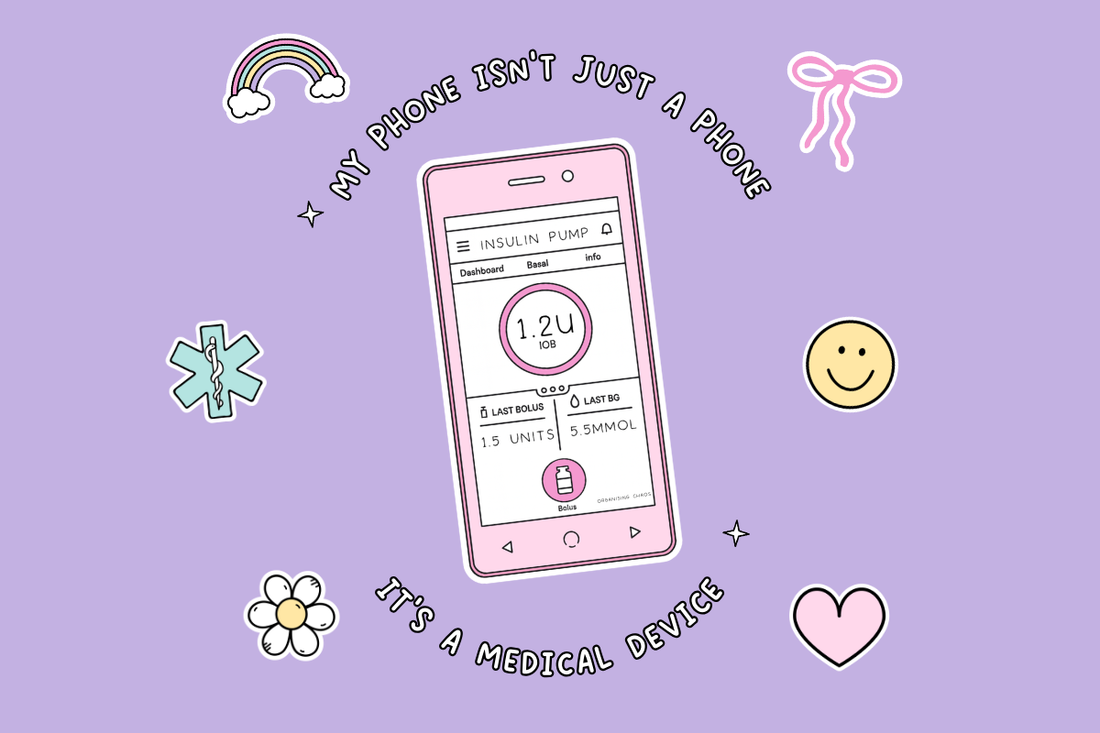
The phrase “my phone isn’t just my phone” isn’t dramatic. It’s factual.
For many people living with type one diabetes, our phones are integrated into our care. They hold our glucose data, our alarms, our insulin controls and our safety net.
So if you see someone being protective over their phone, checking it discreetly in a meeting or requesting permission to keep it on in an exam, there might be more going on than you realise.
And if you are the one living this reality, know that you’re not “too much” for needing it close. You’re not dramatic for advocating for access. You’re managing a complex condition with the tools available to you.
Technology has put diabetes management in the palm of our hands. That’s powerful.
But it also means that sometimes, what looks like an ordinary phone is actually something far more important.
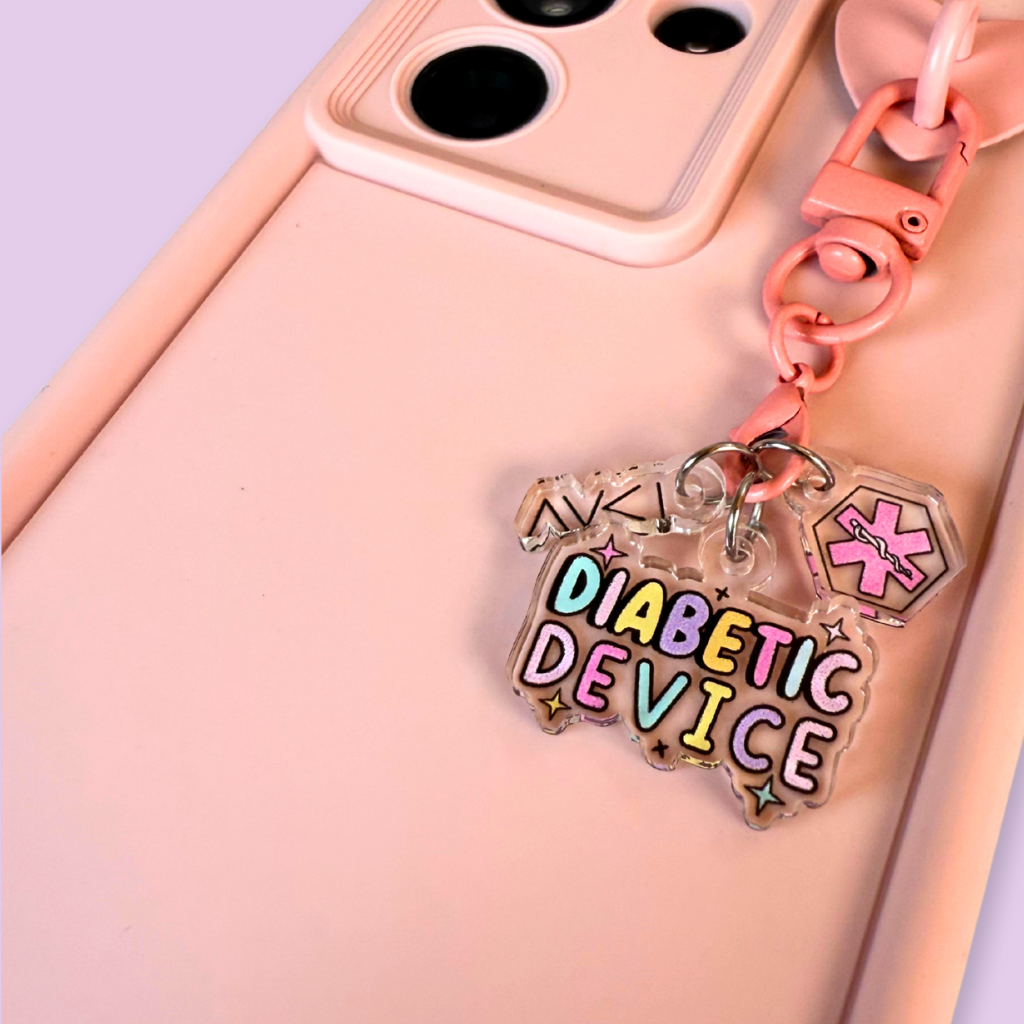
Shop device charms for diabetic devices >>>Here<<<